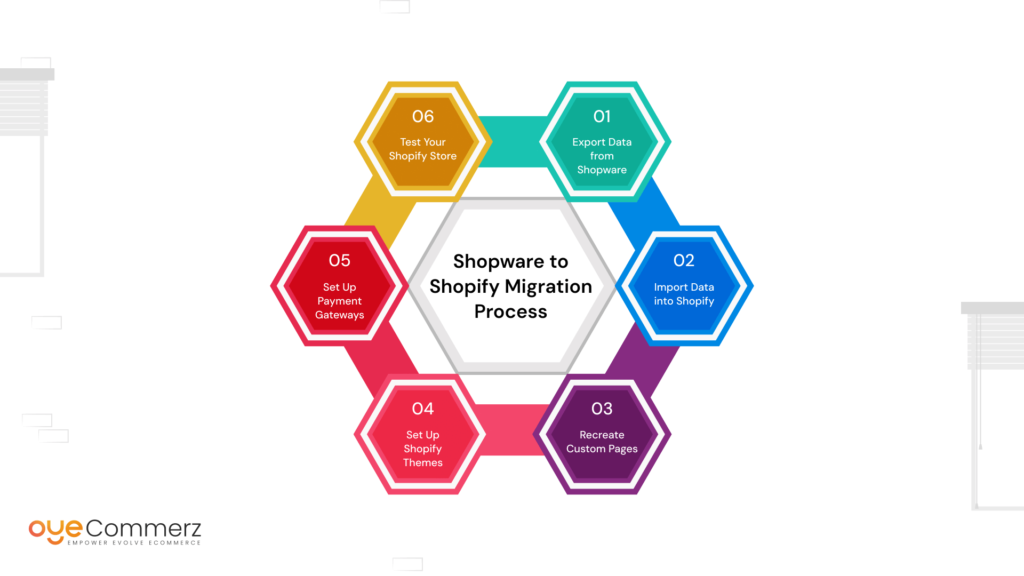
In today’s ever-changing digital marketplace, businesses need an online selling platform that is flexible, growth-oriented, and capable of providing a smooth experience. For U.S. businesses relying on Shopware, a migration to Shopify can offer new possibilities. Whether you're struggling with customization challenges or dealing with operational inefficiencies, Shopify provides a powerful solution to improve your online presence. In this guide, we will explore how migrating from Shopware to Shopify can help businesses thrive, focusing on key aspects like data migration, inventory migration, retaining search rankings, and third-party integrations.
1. Key Reasons to Transition from Shopware to Shopify
Shopware is a reliable platform for businesses looking to build a functional online store, but it does have its limitations, especially when it comes to customization and scalability. As your business expands, these challenges can become more evident. Shopify, on the other hand, offers a user-friendly and adaptable interface, enabling businesses to grow effortlessly. With Shopify’s customizable themes, smooth app compatibility, and strong SEO features, migrating can provide U.S. businesses with a tailored, future-proof solution.
2. Streamlining Your E-commerce Platform Transition
Migrating from Shopware to Shopify isn’t just about changing platforms—it’s about adopting a solution that better meets your needs. The migration process can appear overwhelming, but with the right approach, it becomes a seamless and efficient transition. By partnering with a professional service like OyeCommerz, businesses can ensure their migration process is hassle-free, with minimal disruptions and maximum benefits. Our expert team ensures that your e-commerce platform transition is handled with care, including key phases such as data migration, product catalog transfer, and SEO preservation.
3. Securely Migrating Your Critical Data
One of the most critical aspects of migration is data migration. Whether it’s customer data, product information, or transaction records, all this valuable data must be migrated safely and precisely. Shopify simplifies this task, allowing businesses to migrate key information without errors or omissions. Ensuring data integrity during migration is crucial, as even small errors can disrupt operations. Shopify’s advanced data migration tools and compatibility make this process more efficient, and businesses can rest assured knowing their data is in safe hands.
4. Effortless Product Migration
The product catalog transfer is another important step in migrating from Shopware to Shopify. Shopify allows businesses to migrate inventory, including images, descriptions, pricing structures, and stock levels, with ease. This ensures that your product catalog remains intact, making it easier for you to manage and update your products in the future. Shopify also offers flexible product variants and tailored layouts, enabling you to showcase your products in a way that resonates with your customers.
5. Preserving Customer Relationships
Preserving customer data during migration is important. Shopify’s reliable and efficient migration process allows you to transfer your client records, including purchase history and profiles, ensuring continuity in customer service and personalized experiences. Maintaining customer loyalty is key for any business, and by ensuring a smooth transfer, you retain the ability to target your customers with tailored offers and marketing strategies. Shopify’s customer segmentation features further enhance your ability to provide personalized experiences.
6. Retaining Sales Records
Along with customer data, transferring order history is important for businesses. With Shopify’s easy-to-use tools, you can migrate past orders, ensuring your business operations remain consistent. This transfer helps you track and manage past transactions, making it easier to analyze your sales trends, inventory levels, and revenue performance. Keeping a detailed order history not only ensures operational efficiency but also contributes to a higher satisfaction rate.
7. Protecting SEO During Migration
One of the biggest concerns when migrating from one platform to another is the risk of organic visibility. Fortunately, Shopify offers features and techniques to preserve your SEO during migration. By implementing How to migrate from Shopware to Shopify 301 redirects and optimizing page structures, Shopify ensures that your site’s SEO is maintained, and search rankings are not compromised. This is important for U.S. businesses that rely on organic traffic for sales. With Shopify’s advanced optimization options, such as customizable metadata and mobile optimization, businesses can boost their SEO even further.
8. Customizing Your Storefront
Unlike Shopware, which has some restrictions in terms of customization, Shopify offers a wide range of customizable themes that allow businesses to design a personalized website. With access to both free and premium themes, U.S. businesses can create a website that aligns perfectly with their brand identity. The platform also supports custom feature integration, enabling you to include custom functionalities to your store without complex coding. Whether you want to integrate a new payment gateway, enhance search functionality, or offer tailored shopping experiences, Shopify’s flexibility allows you to meet your specific needs.
9. Third-Party Integrations: Enhancing Your Store’s Functionality
Shopify’s ability to integrate with third-party tools is another significant benefit over Shopware. From marketing automation and helpdesk solutions to inventory management and analytics, Shopify’s ecosystem offers a wide range of options to enhance your store’s performance. These integrations help you streamline your operations, improve customer experience, and increase revenue. By connecting with platforms like data tracking software, Mailchimp, and various payment processors, you can manage your business more effectively and grow seamlessly.
10. Building Unique Solutions with Shopify
Shopify’s flexibility doesn’t just stop at design and apps—it also offers businesses the ability to develop custom functionalities. With Shopify’s robust API and developer-friendly environment, U.S. businesses can build tailored solutions to meet their specific goals. Whether it’s enhancing functionality like multi-currency support or advanced analytics, Shopify allows you to integrate sophisticated tools that Shopware may not offer. This ability to adapt and expand without restrictions is what makes Shopify a ideal platform for businesses looking to expand.
11. Final Thoughts on Shopware to Shopify Migration
Migrating from Shopware to Shopify offers significant benefits for U.S. businesses looking for adaptability, scalability, and improved features. Whether you’re aiming for a smooth transition, streamline your product catalog transfer, or maintain search engine rankings, Shopify provides a powerful and easy-to-use platform.
The ability to design a unique storefront through Shopify themes, connect with external apps, and develop custom functionality gives you the freedom to expand your operations without limitations.
If you’re ready to make the switch and unlock the full potential of your online store, consider working with OyeCommerz for a smooth transition. Contact us today to get started and elevate your e-commerce business to new heights.
Looking for a better e-commerce platform? Let’s talk about how transitioning to Shopify can transform your business today!